
Generic selectors
Exact matches only
Search in title
Search in content
Post Type Selectors

Pec Fly – Training Guide

PL Arched Incline Pec Fly Article Prime Image

What is a Pec Fly?

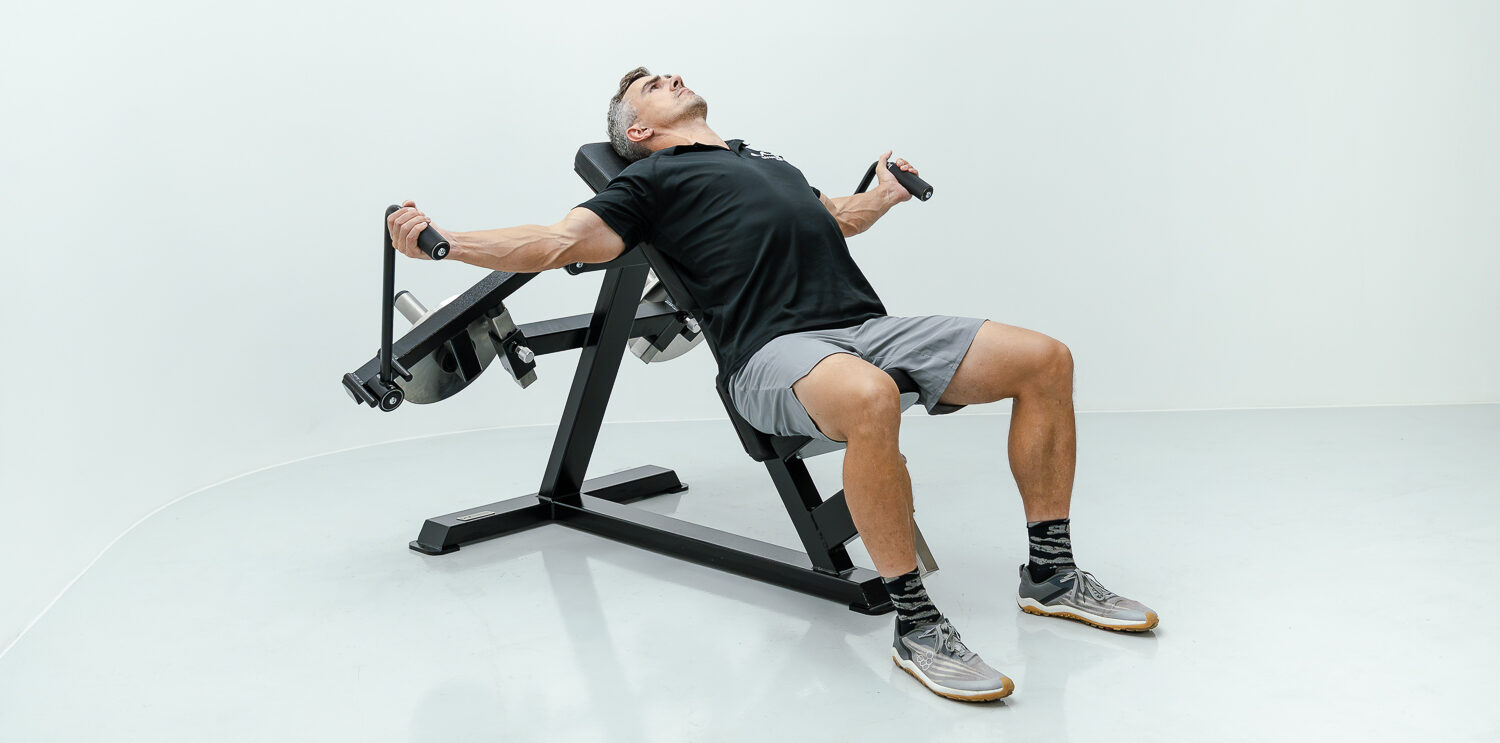
The pec fly is a popular chest isolation exercise that targets the muscles of the upper chest, particularly the clavicular portion of the pectoralis major. By bringing the arms together in a controlled arc, the moment allows you to train the chest through a large range of motion whole maintaining consistent tension.

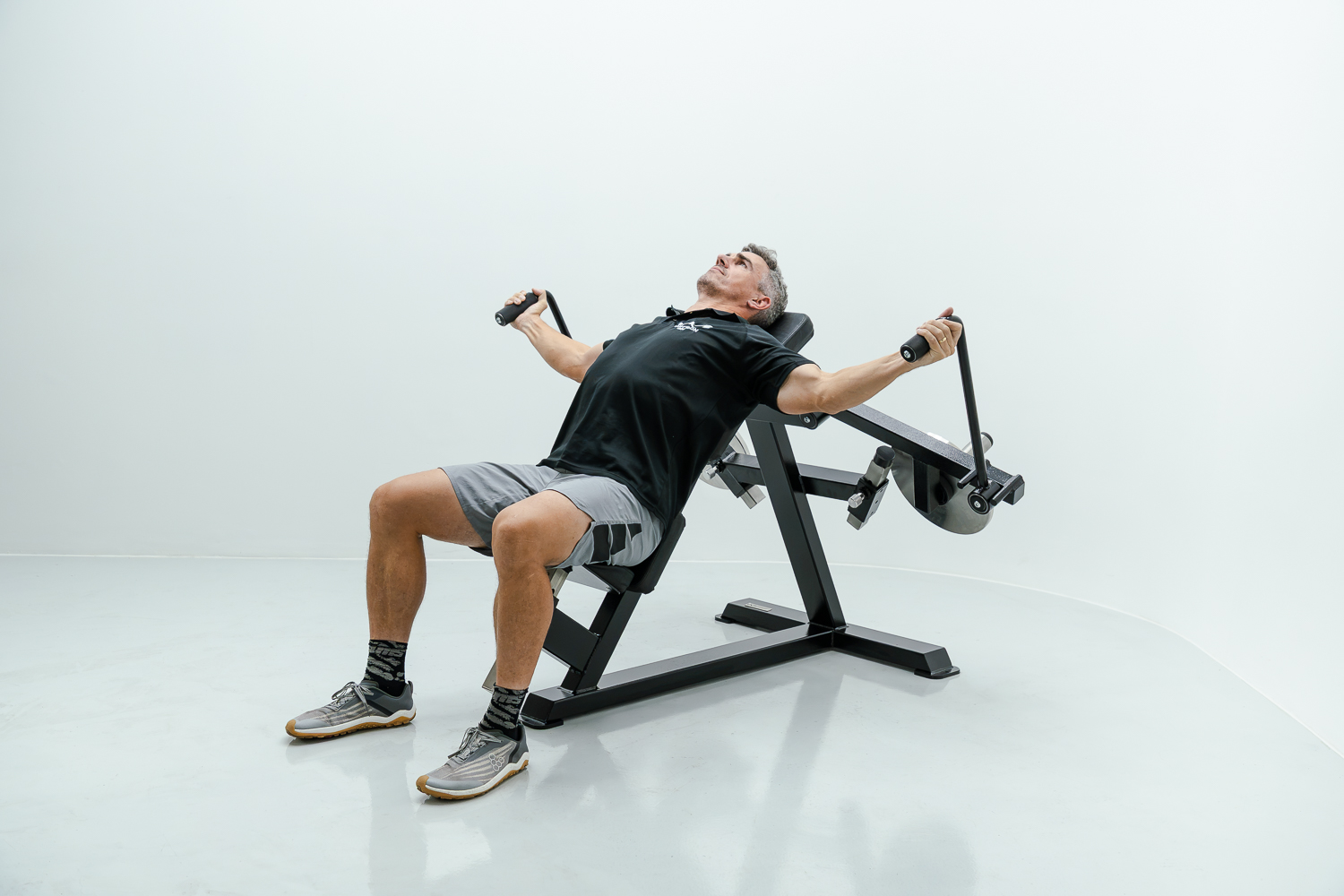
Pec flys are commonly performed using dumbbells with an adjustable bench, or a cable machine such as a Dual Adjustable Pulley or Seated Dual Cable, although specialist machines such as the Watson Arched Incline Pec Fly provide a guided movement pattern and adjustable resistance. The arched backrest helps position the torso for the movement, while the independent arms allow each side of the chest to work independently. This makes the exercise suitable for a wide range of users, from beginners learning to isolate the chest to experienced lifters looking to add targeted upper-chest volume.

You can also perform a seated pec fly using the Watson SS Pec Fly / Rear Delt, or for standing pec fly variations, using the Watson SS Multi Pec / Delt machine.

Frequently Asked Questions About The Pec Fly

Pec Fly Machine
Is the Pec Fly a good exercise for Beginners?

Yes. The Watson Arched Incline Pec Fly is a useful exercise for beginners because the guided movement pattern allows you to learn how to contract and control the chest muscles without needing to stabilise free weights.

You should feel the chest muscles working throughout the movement, with the incline position helping place greater emphasis on the upper portion of the pectorals. When using the machine really focus in on the targeted muscle groups to help promote muscle activation, this is often referred to as the ‘mind muscle connection’.

Not necessarily. The goal is to maintain tension and control throughout the entire repetition. Using a weight that is too heavy can encourage momentum and reduce your ability to achieve a strong contraction.

Most people can benefit from performing the Pec Fly exercise one to three times per week, depending on their overall training programme and the amount of chest volume they are already completing.

Neither is inherently better. Dumbbell flys require greater stabilisation and allow a free movement path, while Pec Fly machines provides a guided movement pattern, adjustable resistance and independent arm movement. 

The machine version can therefore be particularly useful when the goal is a controlled chest isolation movement.

Pec flys can be performed either before or after pressing movements depending on your training goals. Performing them after presses can be an effective way to add additional chest volume once your main compound exercises are complete.

They can also be used earlier in a workout when the goal is to pre-fatigue or focus specifically on the chest.

What Muscles Do Pec Flys Work?

The Watson Arched Incline Pec Fly primarily targets:

  • Pectoralis major (clavicular head/upper pec)
  • Pectoralis major (sternal head/lower pec)
  • Anterior deltoids

Secondary muscles involved include:

  • Serratus anterior
  • Biceps brachii
  • Core muscles

Because the exercise is performed with the arms moving through an arc, rather than pressing the weight away from the body, the chest muscles remain under tension throughout the movement.

Pec Fly Benefits

Targets the upper chest – The inclined position places greater emphasis on the upper portion of the pectoral muscles, making the exercise a useful addition to chest-focused training programmes.

Chest isolation – Unlike compound pressing movements, the pec fly reduces the contribution of the triceps, allowing you to focus more directly on the chest muscles.

Consistent resistance – The machine provides controlled resistance throughout the movement, helping maintain tension as the arms move together and apart.

Independent arm movement – Iso-lateral machines  or dumbbell flys allow each arm to move independently, helping to encourage balanced development and allowing each side of the chest to work through its own natural movement.

Adjustable position – The adjustable seat position and selected range of motion allow for Pec Fly machines to be set up to suit different users, helping every user find a comfortable and effective training position.

Beginner friendly – The guided movement pattern of a machine makes the exercise easier to learn than free-weight alternatives, allowing beginners to focus on chest contractions and controlled movements.

How To Perform a Machine Pec Fly

PLATE LOADED VARIATION

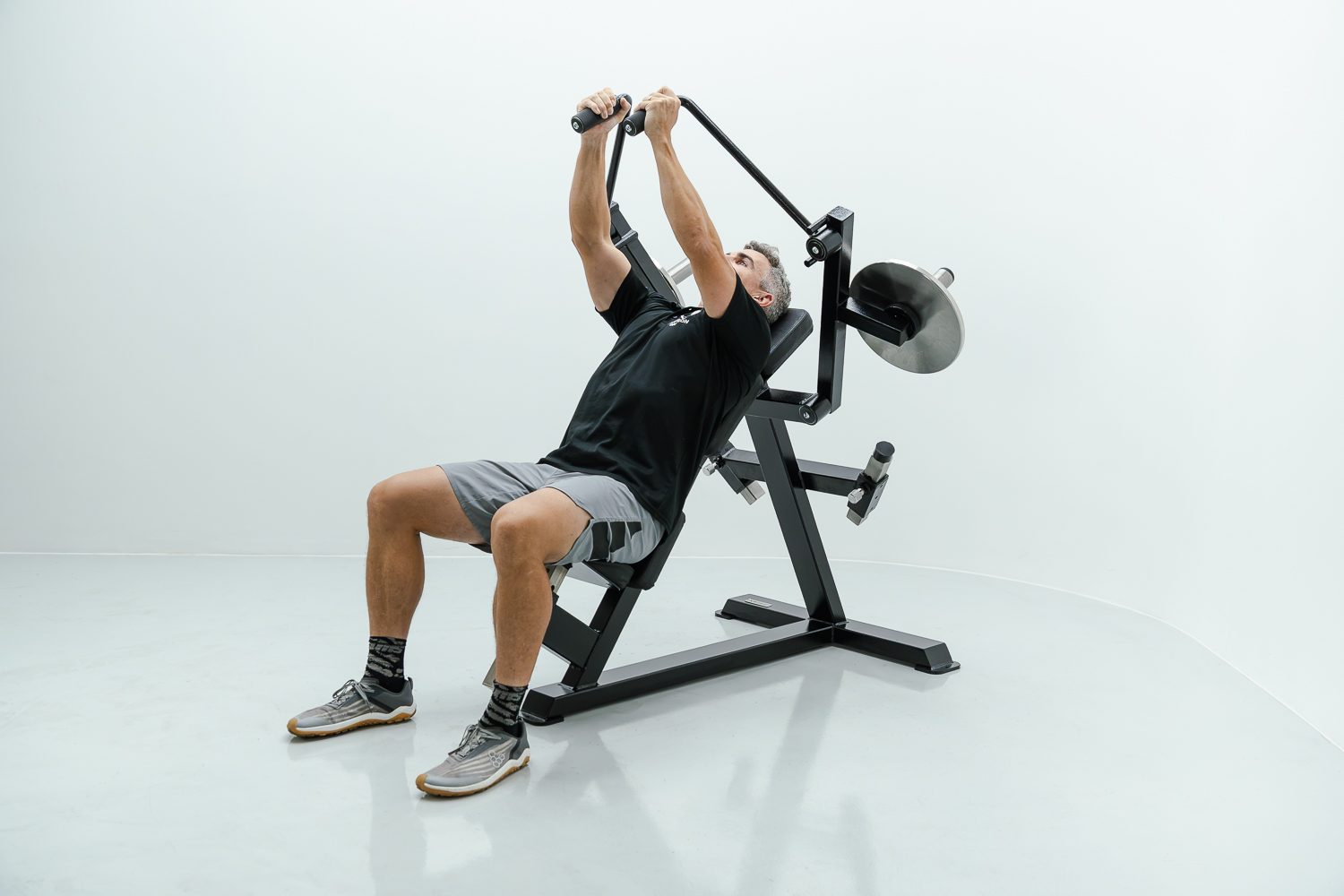
Step 1 – Adjust the seat so that your back and shoulders are positioned comfortably against the machine with the handles at an appropriate starting position, level with your mid-chest.

Step 2 – Adjust the handles by rotating them to an appropriate depth of motion.

Step 3 – Select an appropriate weight and sit with your back firmly supported. Grip the handles and brace your core while keeping your chest lifted.

Step 4 – Bring the handles together by squeezing your chest muscles. Keep the movement controlled and avoid using momentum.

Step 5 – Pause briefly when your hands come together and contract your chest before slowly returning to the starting position.

Avoid allowing the weight to pull your arms back quickly at the end of the repetition.

SEATED SELECTORISED VARIATION

Step 1 – Adjust the seat so that your back and shoulders are positioned comfortably against the machine with the handles at an appropriate starting position, level with your mid-chest.

Step 2 – Select an appropriate weight and sit with your back firmly supported. Grip the handles and brace your core while keeping your chest lifted.

Step 3 – Open your arms under control until you feel a comfortable stretch across the chest.

Step 4 – Bring the handles together by squeezing your chest muscles. Keep the movement controlled and avoid using momentum.

Step 5 – Pause briefly when your hands come together and contract your chest before slowly returning to the starting position.

Avoid allowing the weight to pull your arms back quickly at the end of the repetition.

Watson Adjustable Bench - Dumbbell Pec Fly
Common Pec Fly Mistakes
  • Using too much weight – A pec fly is an isolation exercise, so excessive weight can make it difficult to maintain control. Choose a resistance that allows you to complete every repetition with good technique.

  • Using momentum – Avoid swinging the arms or bouncing through the movement. A slow, controlled tempo keeps the chest working and reduces unnecessary movements.

  • Shrugging the shoulders – Keep your shoulders relaxed and avoid allowing them to rise towards your ears. Focus on moving the shoulder joints while maintaining a stable torso.

  • Shortening the range of motion – Don’t rush through partial repetitions. Use a comfortable range of motion that allows you to achieve a controlled stretch and strong contraction.

  • Overstretching – Although the chest should be stretched at the start of each repetition, avoid forcing the arms excessively far behind the body. Your range of motion should remain comfortable and controlled.

Pec Fly Alternatives

The Pec Fly is a chest isolation movement, so if your gym does not have an Pec Fly station, you could try Dumbbell Flys or Cable Flys. For a pressing-based alternative, you could also use Dumbbell Bench Press or Incline Dumbbell Press. Resistance Band Flys can be another useful option when other equipment is unavailable.

Chris Emmett

Chris Emmett
Watson Sales Representative, Certified Personal Trainer & Nutritionist
Connect on LinkedIn

Related Posts

Annika Wellness
Powered by watson

POWERED by Watson – Annika Wellness – Utah, USA

Rooted in the philosophy that “Health is Wealth,” Annika Wellness was created to redefine the concept of a fitness studio in Utah. Blending high-performance strength training with holistic self-care, Annika is a premier lifestyle sanctuary.

Read More »
Exhale Performance, Belgium
Powered by watson

POWERED by Watson – Exhale Performance – Leuven, Belgium

The goal for Exhale Performance was to build an exclusive training sanctuary that refused to compromise on quality. It needed to foster a tight-knit community of dedicated members while providing an uncompromisingly premium feel – from the biomechanics on the gym floor right down to the luxurious changing and shower facilities.

Read More »